.png)
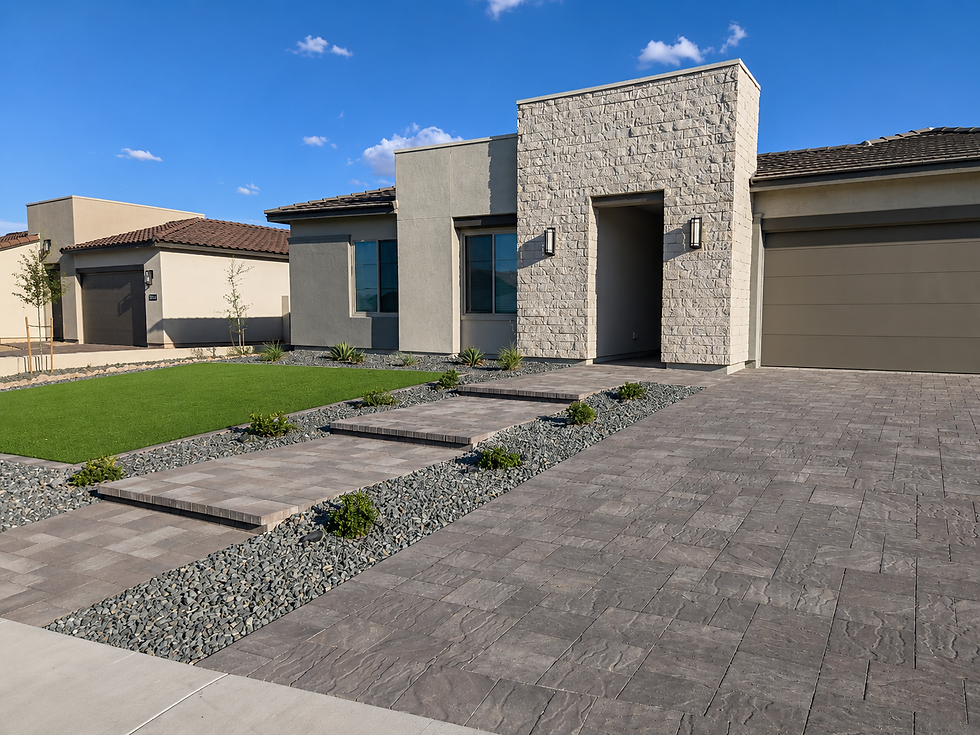
Luxury Driveway Ideas: 16 Ways to Instantly Improve Your Home's Curb Appeal

Most homeowners spend thousands updating landscaping, paint colors, and front doors while completely overlooking one of the largest visual features on their property: the driveway. I get it. Nobody dreams about their driveway. But after 30 years of working in the landscape construction industry, I can tell you a driveway does more to set the tone for a home than almost anything else on the exterior. The right one makes a house feel like a custom estate. The wrong one makes a million-dollar home look like a builder-grade tract house.
Every photo in this article is a real Arizona project, not a stock photo or an AI concept render. I wanted to put together a genuine list of what separates an ordinary driveway from one that makes people slow down when they drive by.

Why Luxury Homes Almost Always Have Better Driveways
If you look closely at the driveways on higher-end homes versus production homes, a few things show up again and again. Luxury driveways tend to be wider than the bare minimum. The geometry is cleaner, with fewer awkward angles and jogs. The materials are more substantial, meaning real bricks, pavers or natural stone instead of plain broom-finish concrete. The colors are coordinated with the roof, stucco, and trim rather than picked in isolation. And the landscaping around the driveway is integrated into the design instead of added around it as an afterthought.
None of that requires a massive lot or an unlimited budget. It requires intention, which is really what this whole list comes down to.
David's Two Cents: The single biggest difference between a driveway that looks expensive and one that doesn't is almost never the paver itself. It's what happens at the edges, the border, the transition into the landscape bed, the width, the symmetry. I've seen $6 per square foot pavers look incredible because the layout and borders were done right, and I've seen $20 per square foot stone look cheap because nobody thought about the edges.
16 Luxury Driveway Ideas
1. Upgrade to Large-Format Concrete Pavers
Larger-format pavers, meaning bigger individual units with fewer joint lines, read as significantly more upscale than standard-size pavers. Fewer seams means the eye reads the surface as one continuous plane instead of a patchwork of small units. This is the direction many of our higher-end clients are going right now, especially paired with a light gray or driftwood tone.
Pro Tip: When choosing large format tile for the driveway, I always recommend to my clients that they stick with concrete. I've found over the years that while large format porcelain and natural stone pavers work beautifully for walkways and backyards, they can crack more easily when constantly subjected to the weight of a vehicle driving over them.
2. Extend the Driveway Beyond Builder Width
This is one people rarely think about, and it's genuinely one of the highest-value changes you can make. Most production homes are built with the narrowest driveway that meets code. Extending it, even by a few feet on one side, makes parking easier, gives you room for a basketball hoop or a trailer, and immediately balances the proportions of the front yard. A driveway that's too narrow for the size of the home is one of the fastest ways to make an otherwise nice house feel undersized.
I usually recommend to my clients that they try to keep the driveway extension to about 18-24" on each side or up to the width of the garage itself. The exceptions to this would be if the extension on the yard side is going to double as a front walkway as well, or for parking additional vehicles on the outside edge.

3. Frame the Driveway with Landscape Walls
Low stucco or stone walls along the edge of a driveway do something a plain landscape bed can't: they create a sense of arrival. Instead of the driveway just being pavement next to grass, it becomes a defined space with a beginning and an end. This is the detail that gives a driveway that estate-entrance feeling, and it's exactly what you see in the brick driveway photo at the top of this article, where low stone walls run the full length of the drive.
4. Match the Driveway to the Architecture
A modern home with a traditional brick driveway looks disconnected, and the reverse is just as true. Neither style is objectively better. The driveway needs to match the house. A contemporary stucco home with clean lines pairs naturally with pavers in a simple linear layout, while a Mediterranean or estate-style home can carry a more traditional herringbone or running-bond brick pattern without looking dated.

5. Blend Walkways Into the Driveway Design
If your front walkway is a different material than your driveway, it almost always looks like two separate projects instead of one cohesive design. Carrying the same paver, the same border detail, and the same color through both the driveway and the walkway ties the whole front yard together. This is one of the simplest upgrades on this list and one of the most overlooked.

6. Create Symmetry
Matching pots on either side of the entry, matching trees, evenly spaced pillars or bollards, mirrored lighting, even garage doors spaced evenly on the facade. Symmetry is one of those things the eye picks up on instantly, even if you can't articulate why a driveway looks put-together. It doesn't need to be perfectly formal or matchy, but balance on either side of the main sightline makes a huge difference.
7. Add Custom Driveway Lighting
Lighting is what makes a driveway read as intentional after dark instead of disappearing entirely. Low bollard lights along the edges, wall-mounted fixtures flanking the garage, or subtle uplighting on a tree or column near the entry all do the job. If you're planning this alongside a broader front yard lighting plan, our outdoor lighting page covers the fixture types and layouts we use most often across the Valley.
8. Use Contrasting Borders
One luxury driveway idea that I am seeing more and more uses something that is called a soldier course along the outside edges. This is a single row of pavers laid perpendicular to the rest of the field, in a darker or lighter contrasting tone and is one of the cheapest upgrades on this entire list relative to the visual impact it has. A double border, or a charcoal edge against a lighter field, frames the whole driveway the same way a mat frames a piece of art.
This look can be especially nice when it flows into the other areas of the yard like the project we installed below. The darker grey paver border of the grass and planting areas throughout the front yard of this home match perfectly to the darker grey soldier course along the custom paver driveway, adding continuity and elevating the look of the whole yard.

9. Add a Turf Accent
A narrow ribbon of turf between the driveway and the front walkway, a small turf accent bed within a circular drive, or even a section between the driveway and front walkways softens all that hardscape without the water use or maintenance of real grass. This is a combination we install constantly in the East Valley since it holds up to full sun without going brown in the summer.

10. Don't Forget Drainage
This is the one nobody wants to think about, and it's also the one that separates a luxury project from an average one. Well-designed driveways hide their drainage. Channel drains get tucked along the low edge of the slope, catch basins get placed where they won't interrupt the pattern, and grading is handled so water moves off the surface without pooling. Skip this step and even a beautiful driveway will show staining and settling within a couple of years.
11. Use Color to Tie the House Together
Pull your paver color from your stone accents, your garage door color, or your roof tile rather than picking a driveway color in isolation. When the driveway, stucco, and trim all sit in the same warm or cool family, the whole front elevation feels designed as one piece instead of assembled from unrelated parts.
12. Think About Arrival
This might be my favorite item on this list. A great driveway isn't just a surface, it's a sequence. Where does the eye land first as you pull in? Does the driveway curve to reveal the entry gradually, or does it just point straight at the garage? Long driveways, gentle curves, and a moment where the house comes into full view all create a sense of arrival that a straight shot from curb to garage simply doesn't.
13. Add Landscape Islands
A planted island in the center of a circular driveway, or a small planting pocket where two driveway sections meet, adds a focal point and softens what would otherwise be a huge expanse of hardscape. A single well-placed tree with low accent lighting, a planter area with seasonal annuals, or a few flowering shrubs is usually all it takes.

14. Consider Decorative Patterns
Pattern is where a driveway goes from functional to genuinely custom. Herringbone reads as classic and holds up structurally better than most patterns under vehicle weight, since the interlocking angles resist shifting. Running bond is simpler and more affordable, and works well on modern homes. Basket weave sits in between, more detail than running bond, less labor than herringbone. The red brick herringbone driveway pictured at the top of this article and below are good examples of how much a pattern alone can elevate a material as simple as brick.

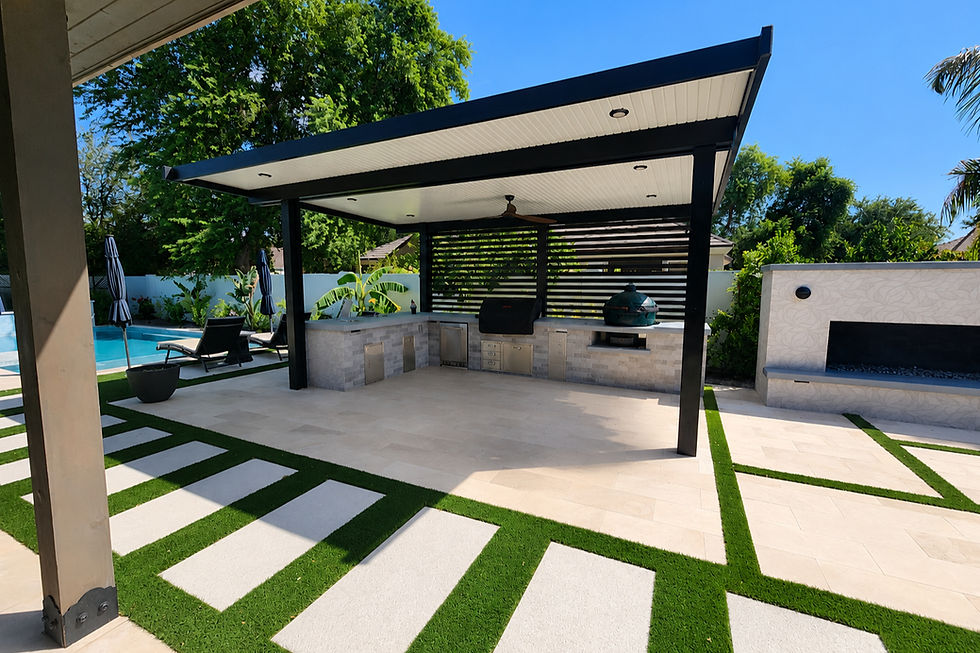
15. Weave Turf Into the Driveway Itself
This one's newer to the Valley, but I've been seeing it show up more and more on modern custom homes: instead of a solid paver or concrete surface, the driveway alternates strips or bands of turf with the hardscape, often lining up with where the tires actually roll. It softens what would otherwise be a big flat slab, adds a strip of green that never needs to be mowed, and gives a driveway a more architectural, custom-home look that you just don't get from a solid paver field.
It's not for every house. This look reads best on modern or contemporary architecture, and it needs to be planned around drainage and base prep just as carefully as any other driveway on this list, since the turf strips still need to support vehicle weight without settling. But on the right home, it's one of the most distinctive things you can do with a driveway.

16. Keep It Timeless
Trends move fast, especially with paver colors and patterns. Before committing, ask whether you'd still like this driveway in fifteen years, not just this year. Neutral tones, classic patterns, and quality materials age far better than whatever color happens to be trending on Pinterest this season. This same principle shows up across the front yard, which I get into in more detail in our front yard landscaping guide.
Mistakes That Make Expensive Homes Look Cheap
I've walked up to plenty of homes worth well over 1-2 million dollars and I always find it odd when they have a driveway that undercuts everything else about the property.
The most common issues I see are:
A driveway that's too narrow for the size of the home
A driveway that does not allow sufficient walking space on the edges for drivers to comfortably enter and exit their vehicles
No border or edging detail at all
Too much plain gray concrete with no color or texture
Paver colors that don't relate to the stucco or roof
Abrupt transitions where the driveway meets the walkway or street
Weeds growing through joints that were never sealed properly
Cracked and unfilled expansion joints on older concrete
A walkway that looks like an entirely separate project from the driveway
Oversized decorative rock beds that overwhelm the driveway instead of framing it
Most of these aren't expensive fixes. They're planning issues, which is exactly why they show up on homes at every price point.
Are Paver Driveways Worth It?
For most Arizona homeowners, yes. Paver driveways can cost more up front than plain concrete, but they last decades with basic upkeep, individual pavers can be replaced instead of tearing out an entire slab if something cracks or stains, and the design flexibility means your driveway can actually match your home instead of being a generic slab. If you're planning to stay in the home long-term or you're focused on resale value, a well-installed paver driveway is one of the better returns you'll get from a hardscape project. Our 12 biggest landscaping mistakes article covers a few more decisions like this one, where spending a bit more up front saves money over the life of the project.
How Much Does a Luxury Driveway Cost?
I'm intentionally not going to give you a single number here, because the range is genuinely wide and depends on a handful of factors:
Material. Standard concrete pavers sit at the more affordable end. Premium large-format pavers, natural stone, and brick cost more per square foot but tend to hold color and pattern definition longer.
Size and extension. A wider or extended driveway costs more simply because there's more surface area, but it's also where a lot of the visual impact on this list comes from.
Pattern complexity. A herringbone or basket weave pattern takes meaningfully more labor to install than a simple running bond because of all the cuts at the edges.
Existing conditions. If we're removing an old concrete slab or dealing with poor soil compaction, that adds cost before a single paver goes down.
Drainage and site work. Grading, channel drains, and base preparation aren't the exciting part of the budget, but skipping them is how driveways fail early.
The honest answer is that a driveway update can run anywhere from a modest border-and-refresh project into five figures for a full extension and premium material replacement. The best way to get a real number is a site visit, since two driveways that look similar in photos can have very different costs depending on what's underneath them.

Real Arizona Driveway Projects
Every driveway shown in this article is a real project completed by Oasis Green in the Phoenix area, not a rendering or a stock photo. Between the large-format gray motor court, the tan and brown running bond driveway, the herringbone brick entrance, the turf-and-paver combination driveway, and the matching walkway pavers, you can see a few very different styles that all follow the same underlying principles: intentional color, real borders, and a design that matches the home it belongs to.
A Driveway Is the First Architectural Statement Your Home Makes
A driveway isn't simply where you park your car. It's the first thing anyone sees before they reach your front door, and it sets an expectation for everything else about the property. Whether you're planning a full front yard renovation or just replacing a tired, cracked driveway, thoughtful materials, proportion, and landscaping can dramatically change how the whole house is perceived from the street. If you've also been thinking about what else could make the front of your home feel more finished, our piece on what makes a backyard feel expensive covers a lot of the same design principles applied to the rest of the property.
Schedule a free consultation and let's talk about what would actually work for your driveway and your home.

Frequently Asked Questions
Are paver driveways worth the money? For most homeowners, yes. They usually cost more upfront than plain concrete but last decades, allow individual repairs instead of full slab replacement, and offer far more design flexibility.
What is the most luxurious driveway material? Natural stone and premium large-format pavers sit at the top of the range, but the material matters less than the layout, border detail, and how well it's matched to the home. A well-designed concrete paver driveway can look more luxurious than a poorly planned natural stone one.
What color pavers look the most expensive? Mid-tone neutrals with subtle color variation, like warm grays, driftwood tones, and blended tan and charcoal mixes, tend to read as the most upscale. Solid, flat single-tone colors, especially very light or very dark ones, tend to look less natural and show wear more visibly.
Do paver driveways add home value? They can improve curb appeal and buyer perception meaningfully, which matters at resale, though the exact return varies by neighborhood and price point. It's more accurate to think of it as a curb appeal investment than a guaranteed dollar-for-dollar return.
What is the best driveway material for Arizona? Paver systems generally perform best here because they handle our heat and temperature swings without the large cracks you often see in poured concrete, and they allow better drainage during our infrequent but intense rain events.
How wide should a luxury driveway be? There's no single rule, but many builder-grade driveways are noticeably narrower than they need to be. I recommend extending a standard two-car driveway by at least 2 feet on each side to allow easy entrance and exits from each vehicle parked on a driveway.
How long do paver driveways last? A properly installed concrete paver driveway with a compacted aggregate base typically lasts 25 to 30 years or more, since the individual units handle heat and UV exposure well and the joints stay flexible through temperature swings.
Can you widen an existing driveway? In most cases, yes. We can extend an existing driveway by adding matching or complementary pavers along one or both sides, which is often more cost-effective than a full driveway replacement.
What driveway pattern looks the most expensive? Herringbone consistently reads as the most upscale pattern, both because of the visual complexity and because it's genuinely more labor-intensive to install correctly, with every edge piece requiring a custom cut.
Ready to Take the Next Steps?
Whether you're planning a new home or working with what's already there, there's a path to a driveway that actually looks intentional. If you're building or in the design phase, this is the easiest time to plan for width, pattern, and drainage before a single yard of concrete is poured. And if you're working with an existing tract home, many of the ideas on this list, like borders, lighting, turf accents, and landscaping around the edges, can elevate the look without touching the slab itself. Get started with a free consultation and we'll figure out what's realistic for your home and your budget.