.png)
Why Is My Backyard Still Hot? The Real Reasons Arizona Backyards Stay Uncomfortably Warm (and How to Fix Them)

One of the most common things I hear during consultations is some version of this:
"We spent a lot of money on our backyard. New patio, new pergola, the whole thing. And nobody wants to sit outside because it's still too hot." Sadly, I hear this from my out-of-state clients and Arizona natives alike.
It's a frustrating situation, and it's more common than people realize. The assumption is usually that adding a patio or pergola will make a backyard comfortable. Sometimes it does. But in Arizona, there are several factors working against you at once and if you don't address them together, you'll still be standing in the heat wondering what went wrong.
This article walks through the main reasons backyards stay hot, and what actually makes a difference here in the Valley.

The Arizona Sun Is Different
This isn't an exaggeration. Arizona's sun is genuinely more intense than what most people have experienced elsewhere and it creates heat problems that don't exist the same way in other climates. One reason, especially here in the valley, is that the air doesn't absorb the sun's energy because of our extremely low humidity. As a result, the sunlight directly reaches the ground (and your skin) instantly, leading to a significant temperature difference between areas in direct sunlight and those in the shade.

A few things are also happening simultaneously:
The sun angle in summer means the sun is nearly overhead during peak hours. That's
direct, intense radiation hitting surfaces at full force. At the same time, reflected heat bounces off light-colored concrete, stucco walls, and other hard surfaces, hitting you from multiple directions. Then there's radiant heat—the heat stored in those same surfaces during the day and slowly released into the evening, which is why backyards can still feel like ovens at 8 p.m.
And if your patio faces west, you will definitely notice the heat from that afternoon sun. That afternoon sun is relentless from roughly 2 p.m. until sunset.
The most comfortable Arizona backyards I've worked on over the years weren't comfortable simply by accident. They were designed with these heat dynamics in mind from the beginning.
Shade Alone Often Isn't Enough When Your Backyard Is Still Hot
A pergola is a beautiful addition to a backyard. But a pergola is not a cool backyard.
Most traditional pergolas provide filtered shade, meaning sunlight still filters through the gaps in the roof. In July, filtered shade isn't enough. The angle of the sun means direct rays can still reach you even under a lattice roof, depending on the time of day.

What actually helps: Solid-roof structures, what we call ramadas, block direct sun completely. In our Creative Shade Solutions article, I go into detail on insulated Alumawood panels, which keep the covered area measurably cooler than an open or lattice-style structure. The difference in comfort is significant.
The orientation also matters. A shade structure on the west or southwest side of your patio will do far more work during the brutal afternoon hours than one positioned elsewhere.
I remember meeting with a retired couple in Sun Lakes who had hired another contractor to install an extensive lattice shade structure across the back two sides of their home. Despite spending a considerable sum on the project, they were dissapointed because it neither reduced the temperature or provided shade. Luckily, we were able to improve their structure by adding a solid roof, which finally allowed them to have a comfortable place to sit and relax in the afternoons.
Hardscape Can Create Heat
The patio you're standing on, the block fence surrounding your yard, the concrete walkways all of these absorb heat during the day and radiate it back at night.
Concrete is one of the biggest culprits. It holds heat for hours. Light-colored concrete reflects more sunlight but can create glare; darker concrete absorbs more and releases it slowly.
Pavers vary depending on material and color. Lighter travertine, for example, tends to stay cooler underfoot than darker concrete pavers which is one reason it's popular here in the Valley.
Block walls and fences can trap heat inside a yard rather than letting it escape. A yard enclosed on all sides with masonry essentially becomes a heat box in summer.

Artificial turf is worth mentioning honestly. High-quality turf with infill stays cooler than older or lower-grade products, and it's significantly more usable than concrete or gravel from a comfort standpoint but in full afternoon sun, it will still get warm. Shading turf with trees or a solid structure makes a real difference. (We covered this in detail in our pet-friendly turf article.)
The takeaway isn't to avoid hardscape but to understand that these materials need to be considered together, not in isolation.
Trees Are One of the Best Long-Term Investments
I'll say this plainly: a mature shade tree does things no structure can replicate. The combination of canopy shade, evapotranspiration (the moisture trees release into the air), and the simple fact that you're standing under something living creates a fundamentally different kind of cool.
The challenge of using trees as part of your overall shade plan is that trees take time. A 15-gallon tree planted today won't provide meaningful canopy for several years. That's why I always recommend thinking about trees as part of the initial design and not as an afterthought. The sooner they can start growing, the sooner you'll reap the benefits as their branches and canopies expand.
Strategic placement also matters a lot here. A tree planted on the west or southwest side of your home or patio can dramatically reduce afternoon heat exposure. Trees positioned to shade hardscape, especially dark surfaces, will prevent heat absorption at the source.

Strategic tree placement also pays dividends inside your home. Years ago when we moved into our current home, one of the first things I did was plant four trees on the west side of my property- a Southern Live Oak and two citrus trees in the backyard, and a desert tree out front. Today those trees have grown into tall, gorgeous canopies that shade much of my backyard and block direct afternoon sun from hitting our west-facing windows. The difference in how hard our AC works on a summer afternoon is noticeable. Strategically planting trees for shade can be one of those investments that keeps paying off in ways you don't fully appreciate until the trees are mature.
Over the years I've had several clients whom I first met while they were building a custom home on acre+ lots. I consistently recommend planting trees first, even if the house isn't entirely finished, because of the advantage of getting extra time for growth. Those who follow this advice and invest in trees while their home is under construction are always so appreciative once they finally move it and realize the extra grow time has given them a headstart. Those who decide to wait almost always come back to me after and tell me they wish they had listened.

Air Movement Matters
Still air in an enclosed backyard feels worse than it actually is. Even modest airflow makes a real difference in perceived comfort.
A few things to consider:
Ceiling fans under a covered patio are one of the highest-value additions you can make. They're inexpensive relative to other improvements and the comfort payoff is immediate. If you have a covered patio and no fan, that's the first thing I'd add.

Open vs. enclosed structures affect airflow significantly. Solid walls on three sides of a covered area block the breeze. Sometimes slightly opening up a structure—or orienting it to catch prevailing winds—changes the feel of the entire space.
Yard layout also plays a role. A densely landscaped yard with walls on all sides may look lush but can trap heat. Leaving some strategic openings allows air to move through.
Water Features: Psychological vs. Actual Cooling
I want to be honest here because I think homeowners sometimes expect more than what they end up getting.
A fountain or small water feature in your backyard is a genuinely lovely addition. The sound of moving water is calming, and there is a mild evaporative cooling effect immediately surrounding the feature. But a fountain is not an air conditioner. You won't feel a temperature difference standing 15 feet away from one in July.
Where water features shine is in creating an atmosphere and a sensory experience that makes a space feel more restful. That's real value. Just don't buy one expecting it to cool your yard.

Misting Systems: When They Work and When They Don't
Outdoor misting systems can be genuinely effective in Arizona—but they work best in specific conditions.
When they work well: Low-humidity days, which fortunately describes most of our year outside of monsoon season. A high-pressure misting system creates a fine mist that evaporates almost immediately and produces noticeable cooling under a covered patio.
When they work less well: Monsoon season. When humidity is high, the evaporative effect is reduced and misters can leave surfaces and seating feeling damp rather than cool.
Maintenance consideration: Misting systems require regular upkeep, nozzle cleaning, filter changes, occasional line flushing. In our hard-water environment, mineral buildup is a real issue. Systems that aren't maintained regularly stop working well and can clog.
We tell our clients that a quality system professionally installed is worth the investment for homeowners who spend a lot of time outside. However, a cheap system will frustrate you within a season.
Color and Surface Choices Matter
This often gets overlooked in the design phase. Lighter surfaces reflect more sunlight and absorb less heat; darker surfaces do the opposite.
This applies to:
Patio and paver color — lighter tones stay cooler underfoot
Wall and fence color — a dark masonry wall facing west is essentially a radiator
Shade structure color — lighter roof panels reflect more heat than darker ones
This doesn't mean every surface needs to be white. It means color should be a conscious choice made with heat in mind, not just aesthetics. In Arizona, those two things have to be considered together.
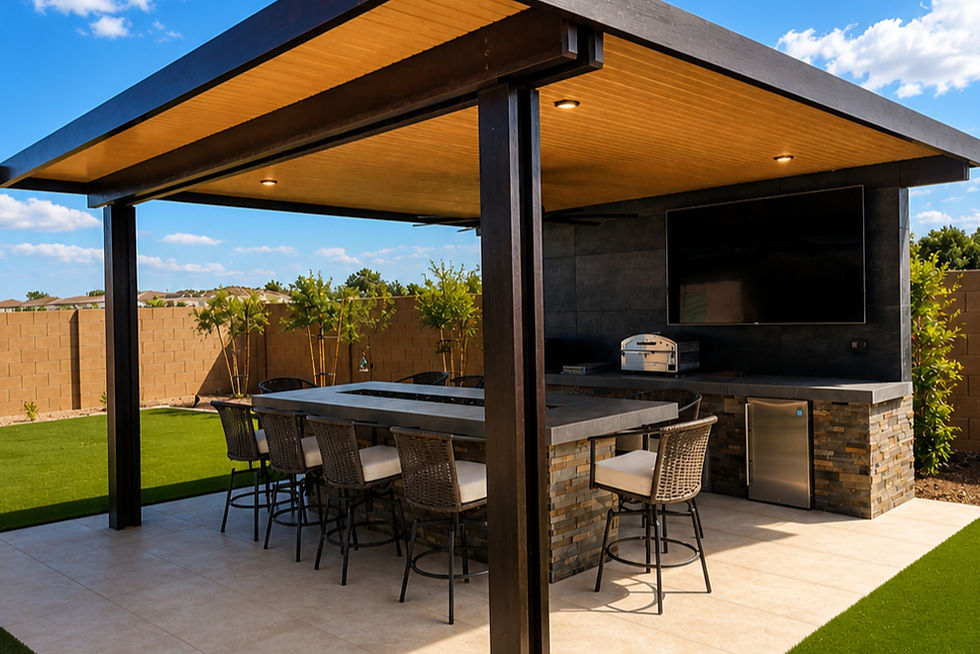
We tell our clients that if they want to use dark colors on one surface, such as a shade structure, they can balance that out with a lighter decking color like shown in this recent project below.
Common Homeowner Mistakes
After 30-plus years of designing backyards in the Valley, I've seen the same patterns come up again and again.
Building for appearance instead of function. A beautiful pergola positioned in the wrong spot, facing the wrong direction, with a lattice roof will look great and provide almost no real comfort during the summer months.
No afternoon shade plan. Morning shade is nice. Afternoon shade is survival. Many backyard designs account for one and forget the other.
Structures that are too small. A 10x10 shade structure in a large open yard isn't going to change how the yard feels. Scale matters.
Ignoring the walls. Block walls enclose most Arizona backyards and they absorb and radiate heat all day. Rarely does anyone think about how to manage that.
Not planning for mature landscaping. Trees and large shrubs planted at installation look sparse at first. Homeowners who don't plan for eventual growth end up with either too little shade or plants that are too close to structures.
Choosing materials based only on cost. Cheaper concrete, lower-grade turf, and bargain shade structures often create more heat problems than they solve.
One lesson we've learned over the years is that shade isn't always intuitive.
Several years ago I designed a contemporary cantilever ramada for a client and carefully positioned it based on where the afternoon summer sun would fall so he could enjoy his outdoor kitchen and lounge chairs under the shade.
During construction, the homeowner wondered if shifting the structure a few feet would make the layout look better. From a design standpoint, that seemed like a minor adjustment, but from a sun-angle standpoint, it completely changed where the shade would land.
After experiencing the backyard through the summer, the homeowner understood why we had originally recommended the placement. That's one reason we spend so much time studying orientation before construction begins. A difference of just a few feet can dramatically affect comfort in Arizona.
What We Think About During Design
When we walk a backyard before a project, we're not just thinking about what looks good. We're reading the space.
Where does the sun hit at 3 p.m. in August? Where does it come off the block wall? Is there any natural airflow, or is this yard completely enclosed? Is there shaded coming from structures or trees on the neighbors' property? What does the family actually like to do outside? Do they entertain, do the kids or pets play in the yard, does someone want to sit with their morning coffee?
Those questions matter because they change the design. A backyard for a family with young kids needs different shade placement than a yard built around an outdoor kitchen and dining area for entertaining. The budget matters, but so does how the space will actually be used.
If your backyard still isn't comfortable, the problem likely isn't just one feature- it's how everything in the outdoor space works together. A thoughtful design can make a dramatic difference in how often your family actually enjoys yard.
Frequently Asked Questions
Why is my patio hotter than my lawn? Hard surfaces like concrete and pavers absorb heat throughout the day and release it slowly, even after the sun goes down. Grass and soil have natural cooling properties. They retain moisture and reflect less heat. Shading your patio and choosing lighter paver materials helps reduce the difference.

Do pergolas really cool a backyard? A traditional lattice-style pergola provides filtered shade, which helps but isn't enough on its own in Arizona summers. On the other hand, ramadas which are solid-roof structures, make a significantly bigger difference because they block direct sun completely. Orientation also matters; a structure shading your afternoon western exposure does far more work than one positioned elsewhere.

Are ramadas better than pergolas for cooling a backyard? For pure heat reduction, yes. A solid roof blocks direct sun and reduces radiant heat from the structure itself. That said, some homeowners prefer the open feel of a pergola, and a well-positioned pergola with ceiling fans is still better than no shade at all. It comes down to priorities: maximum comfort vs. open aesthetic.
Do trees actually help a backyard that is still hot? Yes, trees help significantly. Mature trees are one of the most effective cooling tools available. Canopy shade blocks direct sun, and trees release moisture into the air through a process called evapotranspiration, which actually lowers the surrounding temperature slightly. The limitation is time since trees can take years to establish. Plant them early.
Is artificial turf hotter than other surfaces? In full sun, turf gets warmer than natural grass, but typically less than concrete or dark pavers. Quality and infill type affect performance. Shading your turf with trees or structures reduces heat significantly. We cover this in more detail in our pet-friendly turf article.
Do misting systems actually work? Yes, when conditions are right. High-pressure systems on low-humidity days produce real, noticeable cooling under a covered patio. They're less effective during monsoon season. The bigger issue is maintenance because hard water and mineral buildup will clog nozzles over time if the system isn't serviced regularly.
What's the cheapest way to cool a backyard? Ceiling fans under any existing covered structure are the highest-value, lowest-cost improvement. Beyond that, strategic tree planting (affordable upfront, major payoff over time) and choosing lighter-colored surfaces during any renovation project.
What adds the most shade to a backyard? A solid-roof structure, particularly an insulated panel system, combined with mature trees positioned on the west and southwest sides of the yard. Those two elements together address both direct sun and radiant heat.

Should I add fans? Yes, if you have any covered area. Ceiling fans are inexpensive relative to other landscape improvements and the impact on perceived comfort is immediate. It's one of the first things I recommend when walking a client's existing backyard.
Should I hire a landscape designer? If you're investing a few thousand or more in a backyard, the cost of getting the orientation, shade placement, and material choices wrong is significant. A designer thinks through how all the elements work together, which is exactly the problem most frustrated homeowners run into. For more on when professional design makes sense, see our article Do You Really Need a Landscape Design?
Ready to Figure Out What Your Backyard Is Missing?
If you've already invested in your outdoor space and it still isn't comfortable, or if you're planning a remodel and want to get it right the first time we'd love to talk. We've been designing backyards in the East Valley for over 30 years, and we know what works here. We'd love to help transform your space into an outdoor oasis that reflects your personal style, provides comfort, and enhances your lifestyle for years to come.
Schedule a free consultation and let's take a look together.