.png)
Choosing the Right Landscape Design Style for Your Home: An Arizona Designer's Guide

Updated: Sep 10

I can't tell you how many times a client has pulled up AI generated images or a Pinterest board on their phone, only for me to gently point out that almost none of those designs would actually suit their home. It's not that their taste is bad. It's that a photo can be beautiful in isolation and still be completely wrong for the architecture sitting behind it. A sleek, minimalist modern landscape looks incredible in front of a modern home. That same design in front of a Spanish Colonial with arched doorways and a tile roof? It fights with the house instead of complementing it.
After more than 30 years of designing landscapes across the Phoenix Valley, I've learned that the homeowners who end up happiest with their yards aren't the ones who found (or created) the trendiest photos online. They're the ones who chose a landscape style that actually matches their home. When the architecture and the landscaping work together, the whole property feels more cohesive, more attractive, and honestly, more timeless. It stops feeling like a yard with some plants in it and starts feeling like a complete, intentional space.
This guide is meant to be your starting point. I'm going to walk you through the major landscape design styles I see and install most often here in Arizona, explain what makes each one work, and help you figure out which direction fits your home. I won't go too deep into any single style here. Instead, think of this as the hub, with dedicated guides on each style coming soon where we can really dig into the details.
Why Your Home's Architecture Should Guide Your Landscape Design
Your landscaping should feel like an extension of your house, not a separate project happening in front of it. When the two are designed together, a few things happen:
Curb appeal improves dramatically. A yard that echoes your home's rooflines, colors, and materials reads as intentional rather than random.
Visual balance is created. Plants, hardscape, and architecture all work off the same proportions and lines, so nothing feels out of scale.
Long-term value increases. Buyers and appraisers notice when a property feels cohesive from the street to the front door.
You avoid expensive mistakes. I've seen homeowners spend thousands installing a style that never quite feels right, only to redo it a few years later once they realize why it never clicked.
None of this means you need to match your landscaping to your house exactly. It means the two should be having a conversation with each other instead of ignoring one another completely.
How We Help Clients Choose the Right Style
The moment I walk into a homeowner's home, I am in observation mode. What is their home's style on the outside and inside, and what is their personal decorating style? Do they like color, neutrals, simplicity, or more complexity? Do they prioritize function, or do they incorporate artsy statement pieces into their design? That information then guides the discussion as I help them narrow down the goals and design preferences for their outdoor space. Our discussion includes:
Architectural style of the home itself, since this is usually the biggest clue
Lifestyle, including whether they entertain often, have kids or pets, or want a low-key retreat
Maintenance preferences, because some styles require more upkeep than others
Budget, since materials like natural stone or custom ironwork carry a different price tag than concrete and gravel
Lot size and layout, which can open up or limit certain design directions
Neighborhood context, so their yard fits in appropriately rather than standing out for the wrong reasons
Arizona's climate, which rules out or modifies certain plant choices and materials
Existing landscape features, like mature trees or hardscape they may want to keep and build around
I always tell my clients this part of the process is less about narrowing their options and more about giving themselves permission to stop second-guessing themselves. Once we've talked through these factors, the right style usually becomes pretty obvious.
(If you want the fuller version of how this consultation works, I go into more detail in Do You Really Need a Landscape Design? An Arizona Contractor's Honest Take.)
Popular Landscape Design Styles
Here's an overview of the styles I install most often across Gilbert, Chandler, Mesa, Queen Creek, Scottsdale, and the surrounding Valley. None of these is objectively "better" than another. They just serve different homes and different homeowners.
Modern Landscaping
Modern landscaping is all about clean lines, restraint, and letting a smaller number of elements really shine. Think geometric hardscape, minimal plant palettes, and a lot of negative space used intentionally rather than left empty by accident. Typical materials include large format concrete pavers, smooth stucco walls, and dark metal accents like custom gates or address monuments. Plant choices tend to be architectural rather than lush — things like agave and desert spoon, with clean-edged planting beds instead of informal drifts. This style complements homes with flat or low-slope rooflines, large expanses of glass, and simple, boxy architecture. If your home already reads as modern, a busy or informal landscape will fight it every time.

Modern Farmhouse Landscaping
Modern farmhouse landscaping softens the crisp lines of modern design with warmer, more casual textures. You'll typically see board-formed concrete or gravel paths, black metal fencing or gates, and a mix of structured hedges with looser, more relaxed plantings. It's a style that borrows the simplicity of modern design but adds a sense of warmth and approachability. This pairs naturally with the board and batten siding, metal roofing accents, and covered front porches that define modern farmhouse architecture. It's one of the more popular requests I get from newer builds in communities across the East Valley, since so many production homes are now built in this style.

Modern Desert Landscaping
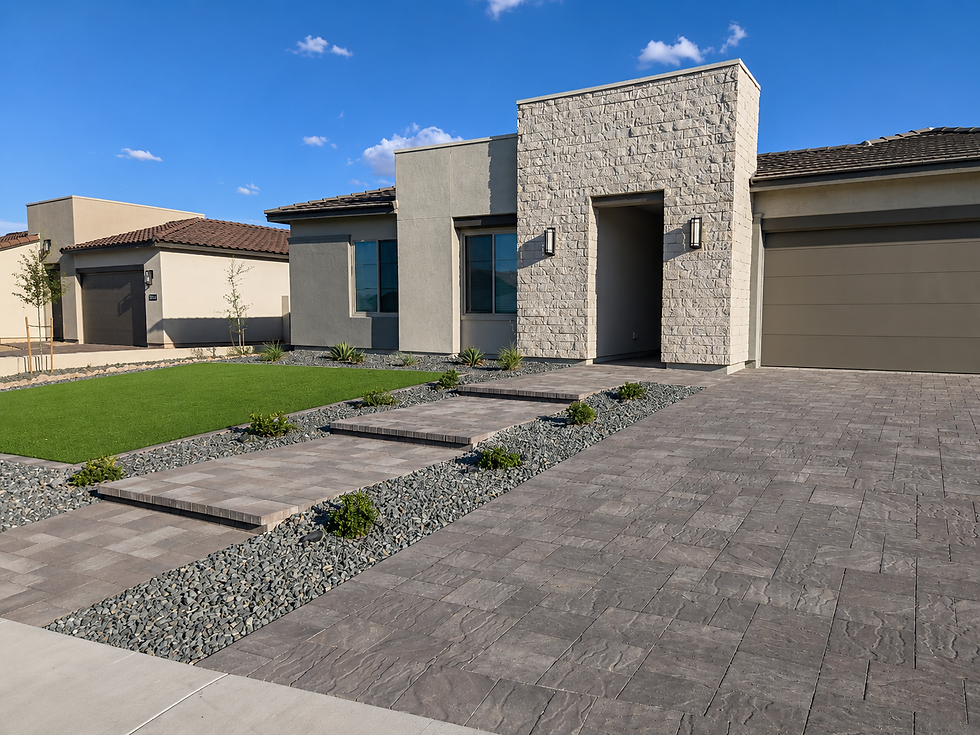
This is probably the most requested style I see in Arizona, and for good reason. It leans into our climate instead of fighting it, using clean paver walkways and driveways, low-water shrubs, ornamental grasses, and a handful of well-placed accent trees rather than dense, uniform planting. Turf, when it's used at all, is usually kept to a smaller, intentional area instead of covering the whole yard. Materials skew toward decomposed granite, natural stone, and dark metal accents that add a crisp edge without feeling cold. It works beautifully with almost any home style here in the Valley, from newer production builds to custom homes, which is part of why it's stayed so popular for years.
Mediterranean Landscaping
Mediterranean landscaping brings a warmer, more romantic feel with curved lines, terracotta and warm-toned pavers, wrought iron details, and a plant palette that leans into olive trees, citrus, and flowering vines like bougainvillea. Water features show up often in this style, whether it's a simple wall fountain or something more elaborate. It pairs beautifully with homes that have stucco or white-washed brick exteriors, arched windows or doorways, and tile roofs, especially the warmer red or terracotta tile you see throughout older and custom neighborhoods in the Valley.
I designed a front yard remodel for a custom Mesa estate built in this exact style, and the goal was to make the landscaping feel like it had always been part of the architecture rather than added on afterward. I was able to find stone for the accent walls, pillars, and other masonry structures that perfectly complemented the stone already on the home, making the design feel cohesive.

Spanish Style Landscaping
Closely related to Mediterranean but with its own distinct character, Spanish style landscaping tends to be a bit more formal and structured. Courtyards, decorative tile accents, wrought iron gates, and symmetrical planting beds are common, along with materials like stacked stone and stucco walls that mirror the home's architecture. This style complements Spanish Colonial homes with their signature arches, iron balcony details, and clay tile roofs.

Contemporary Landscaping
Contemporary landscaping is often confused with modern, but there's a real difference. Where modern tends to be strict and minimal, contemporary is more fluid and current, blending clean lines with a wider variety of materials and textures. You'll see mixed hardscape, like pavers combined with wood decking, alongside a broader, more varied plant palette than true modern design allows. I have found this style works well for newer custom homes that don't fit neatly into one architectural box, because it gives homeowners more flexibility without sacrificing that clean, updated feel.

Traditional Landscaping
Traditional landscaping is the classic, layered look most people picture when they think of a well-established yard. It typically includes a mix of shrubs, flowering plants, and shade trees arranged in a more informal, layered planting style, often paired with brick or natural stone hardscape. This style suits craftsman homes, ranch style homes, and other more classic architecture where a softer, established look feels more appropriate than sharp modern lines. I designed and installed a front yard in this style for a Gilbert craftsman home more than 24 years ago, and even though some of the plants have been swapped out over time, the curved walkway and overall shape of the design still complement the home perfectly today.

Which Landscape Style Fits Your Home?
This is meant as a general starting point rather than a strict rule. Plenty of homes can support more than one style direction.

David's Two Cents: I get asked all the time if a homeowner "has" to match their landscaping to their home's exact architectural style. My honest answer is no, but you do need to respect it. I've designed desert modern landscapes for more traditional homes and it worked because we borrowed a few softening elements, like warmer plant textures, to bridge the gap. What doesn't work is ignoring the architecture entirely and installing whatever you saw on Pinterest last week. The house always wins that argument eventually.
Can You Mix Landscape Styles?
Absolutely, and honestly, most of the yards I design end up blending two styles rather than sticking rigidly to one. The key is doing it intentionally instead of by accident. Modern desert and contemporary blend together naturally, since they share clean lines and a similar restrained plant palette. Mediterranean and Spanish style also mix well, given how closely related they already are.
Where I see homeowners run into trouble is when they try to combine too many unrelated styles at once — a little bit of traditional here, some Mediterranean tile there, a modern fire feature thrown in because they liked it. Individually, each piece might be beautiful. Together, the yard ends up feeling disconnected, like it can't decide what it wants to be. If you're drawn to more than one style, my advice is to pick one as the primary direction and let the second style show up in smaller accents, like a plant choice or a material detail, rather than splitting the design down the middle.

Common Landscape Design Mistakes
I put together a full breakdown of the 12 Biggest Landscaping Mistakes Arizona Homeowners Make, but a few show up specifically when homeowners are choosing a style:
Copying a Pinterest photo exactly without checking if it fits their home's architecture
Ignoring the home's rooflines, colors, and materials completely
Overcrowding plant beds because more felt like it would look more finished
Choosing hardscape materials that clash with the home's existing exterior
Focusing only on what's trending right now instead of what will still look good in ten years
Not planning for how large plants and trees will get once they mature
That last one trips up more homeowners than you'd think. A landscape that looks perfectly proportioned on installation day can look completely overgrown or oddly sparse five years later if mature plant size wasn't part of the original plan.
Which Style Is Right for You?
Choosing a landscape style really comes down to stepping back and looking at your home as a whole, not just picking out individual features you like. When I design for my clients, my goal is that the outdoor space feels like it belongs with the house it surrounds, not like a collection of trendy add-ons.

If you're just getting started, I'd recommend browsing our front yard landscaping ideas guide for more inspiration specific to Arizona homes, or checking out our portfolio to see these styles in real Phoenix-area yards. And if you'd rather skip the guesswork altogether, our landscape design services start with exactly this kind of conversation, matching your home's architecture and your lifestyle to a style that will actually hold up over time. I also wrote a more detailed piece on why the design process matters so much if you want to understand what that process actually looks like before you commit to anything.
Not sure which style fits your home? Let's talk it through. Schedule your free consultation and we'll walk your property together, look at your home's architecture, and figure out the direction that will actually hold up over time.
Frequently Asked Questions
Do I have to match my landscaping exactly to my home's architectural style? No. You want your landscaping to complement your home rather than copy it exactly. Borrowing a few key elements, like materials, colors, or plant textures, is often enough to tie the two together even if you're blending styles.
What's the most popular landscape style in Arizona right now? Modern desert landscaping is consistently the most requested style I see across Gilbert, Chandler, Mesa, and the rest of the Valley. It works well with a wide range of home styles and holds up beautifully in our climate.
Can I change my landscape style without a full renovation? Often, yes. Swapping out plant material, updating hardscape colors, or adding new lighting and accents can shift the feel of a yard significantly without requiring you to start from scratch.
How do I know which style fits my specific home? Start with your home's architecture, including its rooflines, exterior materials, and overall era. From there, factor in your lifestyle, budget, and maintenance preferences. If you're unsure, a design consultation can help narrow it down quickly.
Will dedicated guides for each style be available? Yes. This article is meant to be a starting point, and we'll be publishing in-depth guides on individual styles like modern desert, Mediterranean, and modern farmhouse landscaping soon.
