.png)
12 Biggest Landscaping Mistakes Arizona Homeowners Make (And How to Avoid Them)
- Oasis Green

- Jun 22
- 13 min read
After more than 30 years designing and installing landscapes across the East Valley, I've walked into a lot of front or backyards that didn't turn out the way the homeowner hoped. Almost every time, the problem traces back to one of a handful of mistakes that are completely avoidable once you know what to look for.
This isn't a list to make you feel bad about your yard. It's the same advice I'd give a friend or family member before they spend a dime on their landscape. Some of these mistakes may only cost a couple hundred dollars to fix. Others may cost thousands and a lot of frustration. Either way, catching them early saves you both.
Let's get into it.

Plant Selection Mistakes
Plants are usually where Arizona landscapes go wrong first, and it makes sense why. Most of us (including myself) move to the Phoenix area from somewhere else, or we see a gorgeous photo online and want that same look in our own yard. The problem is that Arizona doesn't care what looks good on Pinterest. It only cares about heat, sun, and water.
1. Fighting Mother Nature Instead of Working With Her
This is the mistake I see more than almost any other, and it's an easy one to fall into. There are plenty of plants that thrive in other parts of the country, lush hydrangeas, classic boxwoods, certain maples, even rose bush varieties, that simply do not grow well in our heat no matter how much love you give them.
Here's the honest truth that I tell my own clients and family members: unless you're a master gardener who genuinely enjoys spending extra time babying a finicky plant through 115-degree summers, you're better off sticking with what actually works here in the Phoenix metro. I've watched homeowners spend years and a small fortune trying to force a plant species to thrive in a climate it was never built for, only to replace it eventually anyway.
A few years ago, a client was adamant about getting a specific fruit tree that isn't available in our local nurseries. I explained that these trees aren't sold here because they don't thrive in our climate and would have to be imported from another state. Despite my warnings about the challenges posed by the dry air and excessive heat, the client was determined to try, believing that with enough care, they could overcome Mother Nature's obstacles. Sadly, but not unexpectedly, the tree died and they had to replace it with something more suitable for Arizona's harsh climate.
Arizona has plenty of stunning, water-wise options that don't require so much of a fight and can add beauty, texture, and color to your landscaping. They will still require some know-how to get started, but if planted in the appropriate locations in your outdoor space, they can do very well:
Desert-adapted trees like Palo Verde, Desert Willow, and Mesquite
Flowering shrubs like Texas Sage, Boxwood Beauty, and Lantana
Succulents and accent plants like Agave and Red Yucca
Beautiful flowering vines like Orange Jubilee, Purple Snail Vine, or Yellow Bells
Choose plants that are already comfortable here in our desert climate, and your yard will look better with far less effort.

2. Mistakes Ignoring Mature Plant Size and Spacing
A plant or tree that looks perfectly proportioned at installation can become a real problem five years down the road. I see this constantly: trees planted too close to a house foundation, shrubs crowding a walkway, or a tree that eventually shades out everything planted beneath it.
Spacing has to account for what a plant will look like in its prime, not just how it looks coming out of a nursery pot. A little patience and planning at the start saves you from spending too much money up front, and then more when you have to remove and replace overgrown landscaping later.
Sadly, I have seen some landscapers try to crowd a project with too many plants because they are only looking at how the project looks on the day it is installed. Unknowing homeowners usually realize within a couple years that they have to then thin out their yard because there's just way too much growing in too small of a space.
![Properly spaced trees and shrubs in a desert landscape]](https://static.wixstatic.com/media/fc3f6b_cdc00291bf884da5b20064e2becf47f0~mv2.jpg/v1/fill/w_980,h_1310,al_c,q_85,usm_0.66_1.00_0.01,enc_avif,quality_auto/fc3f6b_cdc00291bf884da5b20064e2becf47f0~mv2.jpg)
Water & Irrigation Mistakes
Water is the most expensive ongoing cost in any Arizona landscape, and it's also one of the easiest places to waste money without realizing it.
3. Overwatering Desert-Adapted Plants Out of Habit
This one surprises people. Many homeowners assume more water always means a healthier plant, but for desert-adapted species, the opposite is often true. Overwatering can cause root rot, weaken the plant's natural drought tolerance, and in some cases kill it outright.
If you brought irrigation habits from a more humid climate, it's worth having your irrigation system reviewed. Arizona plants and lawns are cared for and maintained very differently than in other states, and I am constantly reminding my clients that what worked for their plants or lawns in Utah, Ohio, or Illinois won't necessarily work here in Phoenix, Arizona.
For more information on schedules and best practices for watering your Arizona landscape, see our article on the Arizona Watering Schedule. More on lawns later on.
4. Poorly Placed or Maintained Drip Systems
Drip irrigation is the backbone of most Arizona landscapes, but a system that isn't placed or maintained correctly can quietly waste water or starve plants for years without anyone noticing.
A few common issues:
Emitters placed too close to the trunk instead of at the plant's root zone
Clogged, damaged, or buried emitters going unnoticed for months
Zones mixing high-water and low-water plants on the same valve
That last one is something I see all the time, and it never ends well. Pairing a thirsty tree with desert plants on one valve means somebody is always getting the wrong amount of water.

Hardscape & Heat Mistakes
I've written before about why Arizona backyards stay hot even after a big investment, and a lot of that comes back to hardscape decisions made early on.
Read our article: Why Is My Backyard Still Hot? An Arizona Homeowner's Guide to What's Actually Going On for a more in-depth discussion on this.
5. Too Much Exposed Hardscape With No Shade Plan
A Mesa, Scottsdale, or Queen Creek patio, walkway, or driveway with zero shade plan will absorb heat all day and radiate it back well into the evening. A backyard space with a lot of hardscape structures like decking, a media wall, and an outdoor kitchen will hold even more heat and stay noticeably warm hours after the sun has gone down.
I understand the appeal of a clean, low-maintenance hardscape. I am a fan myself, but if there's no tree, structure, or shade strategy built in from the start, in my experience that space will most likely sit unused for half the year.
Remember, beautiful materials alone don't make a comfortable Arizona backyard. They must be well balanced and built in conjunction with elements that can provide shade and cooling to the outdoor space.

This solid roof ramada with built-in ceiling fan helps shade and cool the area underneath so the outdoor entertainment space can be used throughout the year instead of for just a few winter months.
6. Wrong Material or Color Choices for Arizona's Sun
Not all hardscape materials perform the same way here. Dark concrete and pavers soak up heat and hold it. Light-colored travertine stays noticeably cooler underfoot.
The same goes for walls, fences, and shade structures. Darker colors absorb more heat, while lighter colors reflect more.
This doesn't mean every surface in your yard needs to be white, but color and material should be a deliberate decision made with our climate in mind, not just an aesthetic one. The project pictured above is a perfect example of this. The homeowners wanted a contemporary ramada and media wall and loved the idea of the back wall being black to tie into the dark metal on the shade structure. Rather than using dark colors for everything, we balanced the dark metal of the shade structure with a light-colored tile.
David's Two Cents: I get it, dark, moody backyards look incredible in photos. But I've had more than one client regret going all-in on dark materials once July hits. My rule of thumb: pick one dark "statement" element, like a media wall or accent feature, and balance everything else around it with lighter tones. You get the look you wanted in pictures, without turning your patio into a frying pan.
Turf & Lawn Mistakes
Lawn decisions trip up a lot of Arizona homeowners, especially those used to having real grass somewhere else. Arizona lawns are unique. Not only do we have to change them out in the fall, but we can't keep them as long, or water them quite the same here in the Phoenix metro as in other places.
7. Real Grass in the Wrong Location or Climate Zone
Real grass absolutely has its place here in the valley, but it needs the right conditions to thrive: enough sun or shade balance, proper irrigation, and realistic expectations about maintenance through our seasonal overseeding cycle.
Planting grass in a spot that doesn't support it, deep shade, reflected heat off a wall, or poor drainage, sets you up for a constant uphill battle. One complaint I hear frequently from homeowners with slightly older homes (and something I noticed on my own property) is how badly their grass looks under a large mature tree. When the tree was young and branches were thin, the grass below was getting plenty of sunlight to thrive. As the tree matured, however, and shade took up a larger portion of the day, the grass began to struggle. Once this happens, you can't just leave it and hope it improves.
See our article Real Grass vs. Artificial Turf: Which is Better for Phoenix Yards? for more on this.

Before replacing the front lawn with artificial turf, these Gilbert homeowners constantly struggled to keep their summer grass green. Too much constant shade will prevent a lawn from growing properly.
8. Cheap Turf Installs That Cut Corners
Artificial turf has come a long way, and when it's installed correctly, it's one of the best low-maintenance options for a Scottsdale, Phoenix, or Queen Creek yard. The problems I get called in to fix almost always trace back to a rushed or budget install: insufficient base preparation, poor drainage, or skipping pet-specific infill for households with dogs. We recently worked with one client who'd only had his new turf for a couple years before it started looking bad and breaking down. He had a couple kids and dogs and knew that if he didn't get a better product and installer, it was only going to get worse.
Even a quality product installed the wrong way will still cause headaches, so it's important to use an experienced contractor who understands the proper techniques and uses quality materials when installing your artificial turf.
If you have pets and you've been considering switching your real grass to artificial turf, please see the article Is Artificial Turf Really Pet Friendly? What Phoenix Dog Owners Actually Think first. Switching from real grass to artificial turf can be a great option for many people, but it isn't always the best choice for everyone.
Design & Long-Term Planning Mistakes
This last category covers the mistakes that don't show up on day one. They show up years later, and they're usually the most expensive mistakes to fix.
9. No Plan for Shade or Growth Over Time
Another mistake I've seen Phoenix homeowners make is a front or backyard designed only around how it looks the day it's finished. These are the types of landscapes that will almost always disappoint a few years later.
Trees take time to mature, and a landscape that doesn't account for that growth often ends up with either too little shade or plants and trees that quickly outgrow their space. I can't tell you how many times I've gone to properties and had to cut out roots or take down trees because they were causing problems for the rest of the yard.
A fast-growing tree planted too close to a perimeter wall can begin to lift and crack the wall with its roots in just a few short years. Once this happens, roots must be cut back and walls then need to be repaired or, in more extreme cases, taken down and completely rebuilt.
Not planning ahead of time for permanent shade structures is also one mistake that can easily be avoided. When I know a homeowner is considering a pergola or ramada to shade their backyard or courtyard, I always try to work that space into the landscape design, even if they don't plan to install it for another few years. It's much easier to build a custom shade structure later if a space has been designated during the planning and design phase, than it is after the fact if no thought was given to it.
If you're considering a shade structure for your outdoor space, I recommend reading my Pergola vs. Ramada comparison on which shade structure is actually the better choice for your outdoor space in Arizona.
10. DIY Problems and Shortcuts That Cost More Down the Line
I truly respect homeowners who want to take on projects themselves, but certain shortcuts tend to backfire here more than in other climates. Skipping proper base prep under pavers, not accounting for drainage, guessing at irrigation zoning, or planting without considering mature size are common examples. What feels like a savings upfront often turns into a bigger repair bill later.
In my experience, most homeowners do not have the necessary skill set to install their own landscapes without some prior experience or an extensive amount of research and planning. Arizona landscaping methods are very different from other places, and even skilled masons can take years to perfect their craft of installing pavers or building outdoor structures. My best advice for avid DIYers is to carefully consider the long-term implications of the DIY projects and strive for a balance between saving money and ensuring quality workmanship.
I remember a family we helped several years ago who had decided they wanted to teach their kids the value of learning to install a paver project themselves. While the wife was completely in agreement that their kids could learn some valuable skills and strengthen their work ethic, I don't think any of them had anticipated how difficult the paver project was that they had undertaken.
Months later and after many grueling weekends of working in the yard, the wife called me desperate to have the project completed. Unbeknownst to the husband, the pavers that had been laid had not been installed properly to account for drainage and would need to all be pulled up and redone. Luckily, the husband and kids were not disappointed but relieved that we came on scene to finish the project for them.
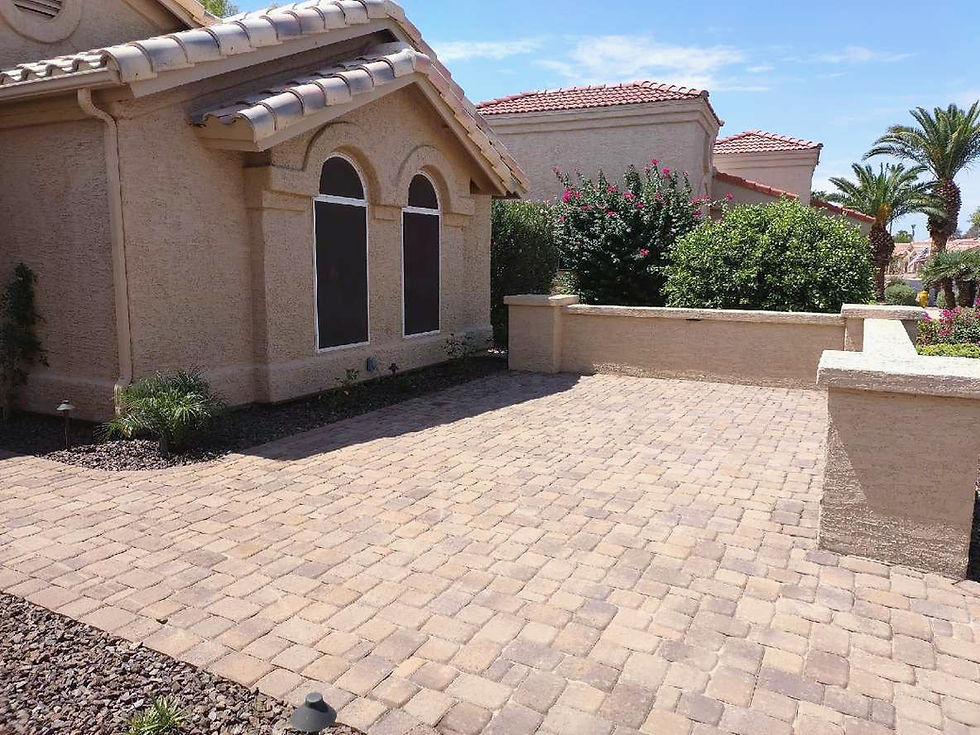
11. Mistake of Chasing the Lowest Bid
This is one of the most expensive landscaping mistakes homeowners make, and unfortunately, it usually doesn't become obvious until construction has already started.
The cheapest proposal often becomes the most expensive project once change orders, repairs, drainage issues, or material substitutions begin showing up.
Price matters. We all have budgets.
But when comparing proposals, make sure you're comparing what's actually included, not just the final number at the bottom of the page. I've seen homeowners save a few thousand dollars upfront only to spend far more fixing problems later, or being asked numerous times for more money because their contractor forgot to include something in their bid. I always recommend that clients ask clarifying questions before signing any agreement so they know exactly who they are working with and what is included in the scope of work for their project.
David's Two Cents: If a bid comes in noticeably lower than everyone else's, that's not always a red flag, but it's always a question mark. Ask what's not included just as much as what is. The contractors who walk you through their numbers without getting defensive are usually the ones who'll still be picking up the phone after the check clears.
12. Mistake of Skipping Professional Design Entirely
I've talked about this at length elsewhere, but it's worth repeating here. Knowing what you want for your yard isn't the same as having a buildable, site-specific design. It's like telling the homebuilder that you want a 4-bedroom house with a big kitchen and expecting him to build the home off of what's in your head.
Arizona's heat, drainage patterns, and soil conditions are technical enough that a generic plan, whether it's DIY, AI-generated, or borrowed from an out-of-state company, almost always needs significant rework once it meets our actual climate. If you have a landscaping project in the foreseeable future, new or remodel, I highly recommend reading Do You Really Need a Landscape Design? An Arizona Contractor's Honest Take.

Frequently Asked Questions
What is the biggest landscaping mistake Arizona homeowners make? Plant selection is the most common one I see. Choosing plants that aren't suited to our heat and sun, rather than working with what naturally thrives here, leads to more frustration and cost than almost any other mistake on this list.
Can I still use plants that aren't native to Arizona? You can, but go in with realistic expectations. Some non-native plants can survive here with extra water, shade, and attention, but they'll require ongoing care that desert-adapted plants simply don't need.
Is artificial turf or real grass the better choice in Arizona? It depends on your yard, your goals, and how it's installed. Both can work well here when they're matched to the right conditions and done correctly.
Do I really need a professional landscape design, or can I do it myself? For small, simple projects, a DIY approach can often work okay if the person installing has some basic understanding or experience. For anything involving hardscape, irrigation zoning, or significant plant investment, a site-specific design saves most homeowners money in the long run.
How do I know if my yard has a shade problem? If your patio, turf, or seating area is unusable for several hours during summer afternoons, that's a sign your shade plan may need some attention.
Let's Make Sure Your Yard Avoids These Mistakes
Whether you're planning a complete backyard transformation or simply want to avoid costly mistakes before you start, we'd be happy to walk your property and share what we'd do differently.
We've been designing and installing landscapes across Gilbert, Chandler, Mesa, Queen Creek, San Tan Valley, Ahwatukee, Tempe, Phoenix, Scottsdale, and the West Valley for more than 30 years, and we know exactly what works here.
Schedule a free consultation and let's talk through your yard together.


