
Best Plants for Arizona Landscaping: A Desert Designer's Guide to Color and Texture

Updated: Sep 14

People are always surprised when I tell them the desert is not a limitation, it is a palette. Once you get past the idea that Arizona landscaping means rocks and one lonely cactus, you start to see how much color and texture you can actually layer into a yard here. Vines climbing a trellis, agaves with those bold sculptural leaves, shrubs that bloom throughout the year. It is all available to us, you just have to know which plants to reach for, and that is really what I want to cover here: some of the best plants for Arizona landscaping, specifically the ones that pull double duty adding both color and texture.
Before I ever designed a single yard, I spent several years doing landscape maintenance, out in the heat every week trimming, pruning, and keeping other people's plant choices alive or, in some cases, watching them fail. That hands-on time taught me things you cannot learn from a plant tag. I saw firsthand which plants actually held up to our summers versus which ones just looked good in the nursery, which ones needed constant babying, and which ones thrived on being left alone.
That background is a big part of why the plants on this list are not just pretty pictures, they are plants I have personally watched perform, season after season, in real Arizona yards.
This is not meant to be a complete plant list. We could write a book on every shrub, vine, and succulent that does well in the Valley. For now I want to walk through a handful of our personal favorites, the ones we come back to project after project because they deliver reliable color, interesting texture, or both. I will break them down the way we think about them on site: vines and climbers, flowering shrubs, evergreen structure shrubs, and succulents and agaves.
Vines and Climbers for Vertical Color
A yard with everything at the same height can feel flat. Vines are one of the easiest ways to fix that, and they do double duty by softening block walls, dressing up a trellis, or giving a bare fence line some life.
Snail Vine I don't use this vine a lot but it is a great option for a clients who want something that grows fast or has a little different look. The purple, curled flowers really do look like tiny snail shells, and they show up beautifully against a plain wall or growing on a trellis. One thing to note is that snail vines can freeze in colder temperatures so they may need some extra attention in the winter. Also keep in mind that because these are fast growers, snail vines will require a little more maintenance.

Tangerine Crossvine is a favorite for anyone who wants fast coverage with a punch of color. These look really nice when planted with a 5x5 black ground-mount or wall-mounted black metal trellis. They produce a ton of orange pink blooms with lush green foilage and do well in partial and full sun.

Torch Glow Bougainvillea is about as tough as a plant gets in our climate, drought tolerant once it is established, and it blooms hard through the warm months. Torch Glow brings that classic hot pink and orange combination, and grows in long tubular or torch shaped columns rather than climbing or sprawling like the traditional bougainavillea.


Lady Banks Rose rounds this section out. It is a fast-growing climbing rose that produces clusters of small yellow or white blooms in spring, and it will happily cover an arbor, trellis or a long section of fence with almost no fuss once established. I originally paired these with black metal wall-mounted trellises on my side yard directly outside our bedroom windows to have something pretty to look at with the blinds open. Unlike full size roses, these stems are nearly thornless.

David's Two Cents: A vine only works if it has something to do. Before I plant one I always ask what it is climbing, what it is softening, or what it is hiding. A snail vine with nothing to climb just sprawls in a bed and looks messy. Give it a trellis or a wall and it becomes a feature.


Flowering Shrubs That Do the Heavy Lifting
If vines add height, flowering shrubs are what carry the color through the middle of the yard. These are the plants I lean on most for clients who want a yard that feels alive, not just landscaped.
Orange Jubilee is one of the hardest working shrubs in Arizona. It blooms in clusters of tubular orange flowers nearly year round in the right spot, and hummingbirds cannot get enough of it. It is a fast growing and can reach up to 8-12 feet tall if left unchecked. It can also be trained against a wall trellis.

Bells of Fire is a dwarf version of the Orange Jubilee and a flowering shrub I frequently recommend. It too is a drought-tolerant plant that grows quickly, though it stays more tidy, only reaching about 3-6 feet tall. It does best in full sun but can tolerate light shade. I love the contrast of the vibrant red-orange color against the deep green foilage.

Yellow Bells, specifically the Lydia variety, is also a more compact cousin to Orange Jubilee and produces the same trumpet shaped blooms in a cheerful yellow. We use it a lot as a mid-height filler between larger shrubs and groundcover. It needs about 6 hours a day at least of full sun for the best blooms.

Ruellia Katie is a low, mounding shrub with purple flowers that blooms almost continuously through the warm season. It is a great low border plant and one we use constantly along walkways and tight spaces. It also works well in garden planters.

Red Hibiscus brings a tropical energy that most people do not expect to see thriving in the desert. It does beautifully here with the right sun exposure and regular, deep watering. The blooms are enormous and the color is unmatched. I had these for many years outside of the large window of our master bedroom.

Lavender Star Flower brings an almost tropical feel to an Arizona landscape with its vibrant lavender-purple blooms and glossy green foliage. It flowers for much of the warm season, handles our desert heat surprisingly well once established, and works beautifully as an accent shrub, informal hedge, or background planting. I like using it where clients want a softer look with consistent color, especially around patios or outdoor entertaining spaces where the flowers can be appreciated up close.

Little John Dwarf Bottle Brush gives you deep red, bottlebrush shaped flowers on a compact evergreen shrub. It is a great choice when you want color without a plant that outgrows its space as it only gets to about 3 feet tall. It can be used as a standalone shrub or combined with several others to create a hedge. It has a citrus scent when crushed and does really well in the heat.

Red, Gold or Pink Spreading Lantana is one I recommend to many of my clients because it is close to indestructible once established. It blooms almost nonstop, handles our heat without complaint, and works as a groundcover, a border, or spilling over a raised planter wall.
White and purple lantana are also really pretty options and while they thrive in the winter, they don't do so well in the heat. I usually only plant them if I am mixing them with a red, gold or pink lantana so they grown together. That way, your shrub is always in bloom, no matter the season.

Mexican Bird of Paradise is a lively, heat-tolerant shrub or small tree originating from northern Mexico and southern Texas. Known for its delicate green leaves and aromatic, bright yellow flower spikes, it is highly valued in dry landscaping for being drought resistant attracting hummingbirds and butterflies. You'll see this planted often along the sides of the freeways throughout the Phoenix metro.

Tropical Bird of Paradise is a breathtaking ornamental plant with bright orange and deep blue flowers that resemble a tropical bird in flight. It flourishes in warm, humid environments and I like using it as a corner anchor or massed together for a bold statement. It does best when planted where it can get morning sun and afternoon shade and is a little sensitive to winter frosts.

Desert Marigold produces bright yellow blooms on silvery stems from spring through fall, reseeds itself over time, and gives a yard that authentic southwestern feel without looking like every other desert landscape. I especially like it during the springtime. While it's not a something I use very often, there are certain neighborhoods in North Scottsdale that require this native plant in their landscaping.

Penstemon, sometimes called beardtongue, is a native perennial that sends up tall spikes of tubular red, pink, or purple flowers in spring. Hummingbirds love it, and it adds a vertical, naturalistic element when paired with grasses or agaves. It flowers in spring, fall and sometimes in winter. This is one plant that rabbits enjoy so if you live on the edge of town, this is something to look out for.

Lynn's Legacy Sage features soft gray-green leaves and lavender flowers that attract pollinators. I recommend this plant often because of it's ability to withstand our heat with little maintenance. It blooms frequently during most months of the year and is one plant I see recommended by lot of HOA's. I also notice that a lot of commercial spaces and community common areas use this plant because of how well it does in the heat and how little care it needs to look nice.

Bush Morning Glory is a personal favorite for anyone who wants that classic trumpet shaped bloom without the aggressive spread of a true vine. It stays more contained as a rounded shrub and flowers heavily. I will say, it is a little temperamental and rabbits also love this shrub so if you live within 2-3 miles of the edge of town, beware that rabbits will devour these.

Lavender Skyflower blooms with numerous flowers in lavender-blue or purple with white edges from spring to fall. These have seasons of hanging clusters of golden-yellow berries, which birds, butterflies and pollinators like. These are gorgeous shrubs but can grow fairly quickly so regular trimming is necessary.

Plumeria is the one plant on this list that always surprises people. Most associate it with Hawaii, but it grows well here with full sun and well draining soil. The blooms are large, waxy, and fragrant, and a plumeria near an entry gate or along a driveway creates a real moment. It does need to be planted in the right location however or it doesn't do well. It also must have right soil conditions. Plumerias don't like radiant heat so I try to avoid planting them right next to large walls or masonry structures.

David's Two Cents: The biggest mistake I see with flowering shrubs is planting just one and expecting it to carry the whole bed. Group them. A single Ruellia Katie is nice. Four Ruellia Katies with a Red Hibiscus behind them and some Purple Heart at the base is a designed planting.
Evergreen Shrubs for Structure and Texture
Color gets all the attention, but texture and structure are what hold a landscape together, especially in the months when the flowering shrubs are between bloom cycles.
Boxwood Beauty is compact, slow growing, and covered in small glossy leaves that give it a clean, tailored look. We use it constantly for low hedging and formal borders.
I love these using these in tighteer spaces like on side yards or in garden boxes because they are slow growing.

Little Ollie, the dwarf olive, is another dense evergreen we reach for again and again. It has a fine, textured leaf that reads almost silvery in certain light and works beautifully as a low hedge or a rounded accent shrub. Pretty hearty.

Dwarf Myrtle gives you a tight, compact form with small aromatic leaves. It is an easy way to add a formal, clipped texture to a bed without much maintenance. This plant works well for hedges but can be hard to trim because it binds up the trimmers.

Yaupon Holly is ideal for hedges, but unlike the Dwarf Myrtle, it lacks a waxy feel to the leaves and is easier to trim. It is a highly adaptable shrub, tolerates drought and the flowers act as pollinators.

Trailing Rosemary is a great dual purpose plant. It cascades beautifully over a wall or planter, stays evergreen year round, and happens to be a useful culinary herb too. It has a really nice scent but can attract a lot of bees so it may not be the best option right next to a door or on a patio.

Arabian Jasmine brings fragrant white flowers and glossy foliage, and it is a great choice near a patio or entry where you will actually smell it in the evening. For my clients who do a lot of outdoor entertaining, this is perfect shrub to plant throughout the entertainment spaces.

Canna Lily, adds bold, paddle shaped foliage and tall spikes of color that read almost tropical. It is a great way to add height and a completely different leaf texture into a bed of finer leafed shrubs. Like a bulb, they go dormant during the winter and come back blooming in the spring so they're good to balance with other plants or shrubs which bloom during the winter season.
Canna lilies need a lot of water so they work really well planted by ponds or areas with regular moisture. One thing to note is that they can easily get sunburned if they don't get sufficient afternoon shade so location is important to consider.

Succulents and Agaves for Bold Texture
No Arizona plant list is complete without agaves. These are the plants that give a bed real architectural weight, and they ask for almost nothing in return.
Agave Desmettiana has smooth, glossy, spineless leaves in a soft blue-green, which makes it a good choice for spots where people walk close by. These are my favorite agave to use but they can be fast growing with off-shoots of babies so you'll need to keep an eye on them from time to time.

Perry's Agave is a smaller, more compact agave with a tight rosette form, ideal for tucking into smaller planting pockets where you still want that agave shape. The have a lighter green-grey color and look really pretty when set against other softer plant material.
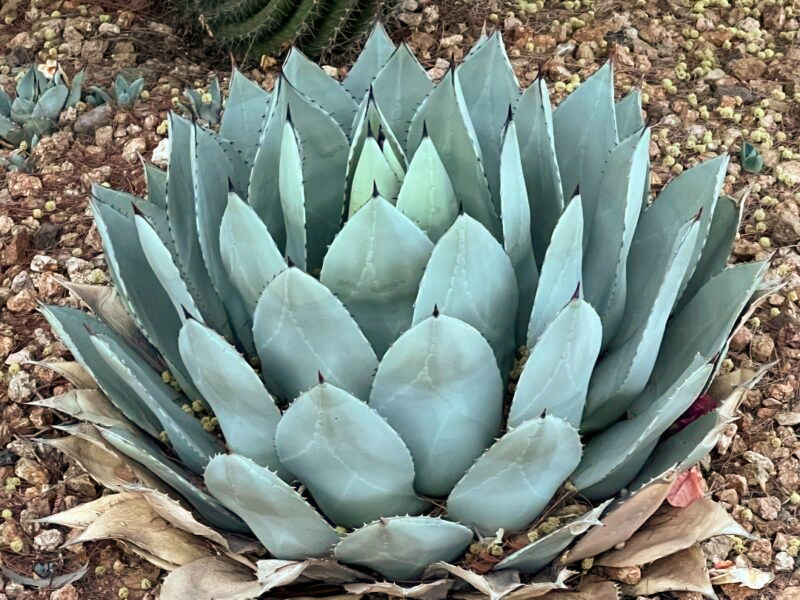
Twin Flower Agave rounds out the group with a striking, symmetrical rosette that holds up as a focal point on its own or repeated in a row along a bed edge. A little tempermental but nice ornamental.
David's Two Cents: Agaves are the easiest plants on this entire list to get wrong, and it is almost always a spacing mistake. Every agave I have listed here gets wider than it looks in a five gallon pot. Give it room now, even if the bed looks a little sparse the first year. You will thank yourself in three years.
Planning for Color All Year Long
One thing I always think about when I am designing a front yard or backyard is not just which plants to use, but when each one blooms and how often. Especially in desertscapes, my goal is to layer things so there is always something giving you color no matter what month it is. A lot of my clients who moved here from other states are used to everything going brown and lifeless the second it gets cold, and they are always pleasantly surprised that an Arizona yard does not have to work that way.
After more than 30 years of designing outdoor spaces in this climate, I have a pretty good feel for which plants carry a yard through each season and how to overlap their bloom times so nothing ever feels flat or empty. That is honestly one of my favorite parts of this job, and it is a big part of why clients keep coming back to us for their next project.
Bringing It All Together
The plants on this list are not meant to all go in one yard. Part of what we do at Oasis Green is figure out which of these fit your home's style, your sun exposure, and how much color versus texture you actually want to live with. If you are working through your own style direction first, our landscape design style guide is a good place to start, and if you want to see how a lot of these plants show up in an actual front yard design, take a look at our front yard landscaping guide. If your focus is more on the backyard side of things, our outdoor entertaining guide covers how planting choices tie into a space you actually want to spend time in.
Frequently Asked Questions
What plants add the most color to an Arizona landscape without a lot of upkeep? Red spreading lantana, orange jubilee, and ruellia katie are three of the most reliable low-maintenance bloomers we install. All three handle heat well and bloom for months at a time.
Do vines actually work well in Arizona heat? Yes, several vines are excellent choices here. Snail vine, tangerine crossvine, and bougainvillea are all heat tolerant and, once established, need surprisingly little water to keep blooming.
Can I mix agaves with flowering shrubs in the same bed? Absolutely, and we do it constantly. Agaves give a bed structure and year-round texture, while flowering shrubs like ruellia katie or lantana planted around them fill in the color. It is one of the most classic combinations in Arizona design.
What is a good plant for adding purple color to a desert landscape? Ruellia katie and penstemon both add purple blooms if you want something that flowers rather than just colored foliage.
How do I know how much space to leave between agaves and other plants? Always plan for the plant's mature size, not the size it comes in from the nursery. Agaves in particular can double or triple in width within a few years, so give them more room than seems necessary on install day.

Ready to Add Color and Texture to Your Yard?
Picking the right plants is only half the equation. The other half is knowing where to put them, how to group them, and how to keep them thriving through everything an Arizona summer throws at them, and that is where our experience really comes into play. If you are ready to bring some of these favorites into your own front or backyard, or you just want a second opinion on a planting plan you are already working on, reach out to our team at Oasis Green. We would love to walk your property with you and put together a plan that keeps your yard colorful and full of texture all year long.
Arizona Plant Care Products We Recommend
These are the kinds of finishing pieces we use or recommend when we're putting together Arizona landscapes for our clients. Most of our custom landscape elements are sourced locally or built specifically for the project, but when there is a practical, budget-friendly option homeowners can purchase themselves, I've included a few of those below.
For anything climbing, a sturdy trellis makes or breaks the plant. I mentioned this in my Two Cents above, but I will say it again here because it matters that much. A wall-mounted trellis or a freestanding 5x5 ground-mount trellis gives vines like the tangerine crossvine, snail vine, or Lady Banks rose something real to hold onto, and it looks a lot more intentional than a vine sprawling across a bed with nothing to climb.
Planter boxes and bowls are another great way to showcase flowering plants and shrubs and we use them regularly with many of our projects.
Shop Similar Trellis and Planter Box Options
Modern Black Metal Garden Trellis: A clean, simple option for climbing vines when you want the trellis to blend into a modern landscape. We like that this can be hung either vertically or horizontally. It's a great option for long backyard wall that needs some color, texture or vertical interest.
Metal Planter Box with Trellis: A nice option if you want a trellis system that includes a garden box. This can be placed against a wall or on a patio to create a privacy wall.
Modern Rectangular Planter Box: Planter boxes are a great way to add height, visual interest, and work well by narrow walkways or smaller spaces. While many of our outdoor planters are purchased locally, we have found some great options available on Amazon as well. The metal garden boxes (pictured earlier in the article) are from a project we installed for a client who wanted to maximize the space of his small backyard and the modern black metal ties in perfectly to other black accents throughout his yard
Low Profile Concrete Planter Bowl: These work exceptionally well with flowers and slower growing succulents and plants and are often placed on pillars or small walls to add color and style (pictured earlier in the article). We like this particular concrete planter bowl because it comes with bottom drainage hole pre-drilled allowing for spaghetti lines to be fed up for automatic watering.
Concrete Planter Bowl Set of 3: We love the look of these concrete planter bowls and they work for both indoors and outdoors. They also have a drainage hole pre-drilled to allow for spaghetti irrigation lines to be fed through or, they can be used independently on a patio, porch, or incorporated into a larger project.
Happy Planting!


